Italian Design Principles for Luxury Living Rooms
In Italy, the living room is not a room to be decorated — it is a room to be composed. Its quality is not measured in expenditure but in coherence: the silent agreement between every surface, material, and object within it.
The living room is the most demanding room in the house. It must perform across contexts — intimate and expansive, formal and relaxed, day and evening. In luxury interiors of any tradition, it is the room that reveals most clearly whether design decisions were made with genuine understanding or merely assembled from a catalogue of beautiful things.
Italian design has a particular answer to this challenge — one refined over centuries of working with some of the world’s finest materials and most demanding clients. It is an answer that has less to do with specific styles or periods, and more to do with a set of principles that, applied with rigour and patience, produce rooms of enduring quality.
The room as a composed whole
The first Italian principle is unity of intention. Every element in a luxury living room — the floor, the walls, the ceiling, the furniture, the lighting, the objects — must participate in a single, coherent vision. This does not mean uniformity. It means that each choice has been made in full awareness of every other choice, and that the relationships between elements are as deliberate as the elements themselves.
In practice, this means beginning with a clear material palette and adhering to it with discipline. An Italian living room might be built around two or three primary materials — say, a pale Paonazzo marble, an aged linen, and a matte-patinated bronze — and every subsequent decision is evaluated against this foundation. The palette is the grammar; the room is the sentence.
The hierarchy of surfaces
Italian design establishes a clear hierarchy of surfaces: floor, then wall, then ceiling, then furniture. The floor is the most important surface in the room. It is the one element the eye encounters continuously, at every angle, under every condition of light. A poorly chosen floor cannot be saved by excellent furniture; an excellent floor will elevate everything placed upon it.
For this reason, Italian luxury interiors almost invariably begin the design process with the floor. Natural stone — marble, travertine, limestone — is the canonical choice, not for reasons of fashion but for reasons of permanence and complexity. Natural stone improves with time, develops a patina that cannot be manufactured, and holds light in a way that no engineered material replicates.
Light as a primary material
Italian designers treat light — both natural and artificial — as a material, with as much intentionality as they bring to marble or textile. The design of a luxury living room’s lighting is not an afterthought added to the room once the furniture is in place. It is conceived from the earliest stages of the project, in conversation with the architecture and the material palette.
In Italian terms, a well-lit room is a room in which no single light source dominates, but in which multiple layers of light — ambient, accent, task — work together to produce an atmosphere that shifts across the day. The midday light and the candlelight version of the same room should feel related but distinct. Both should be beautiful.
Furniture as object, not filling
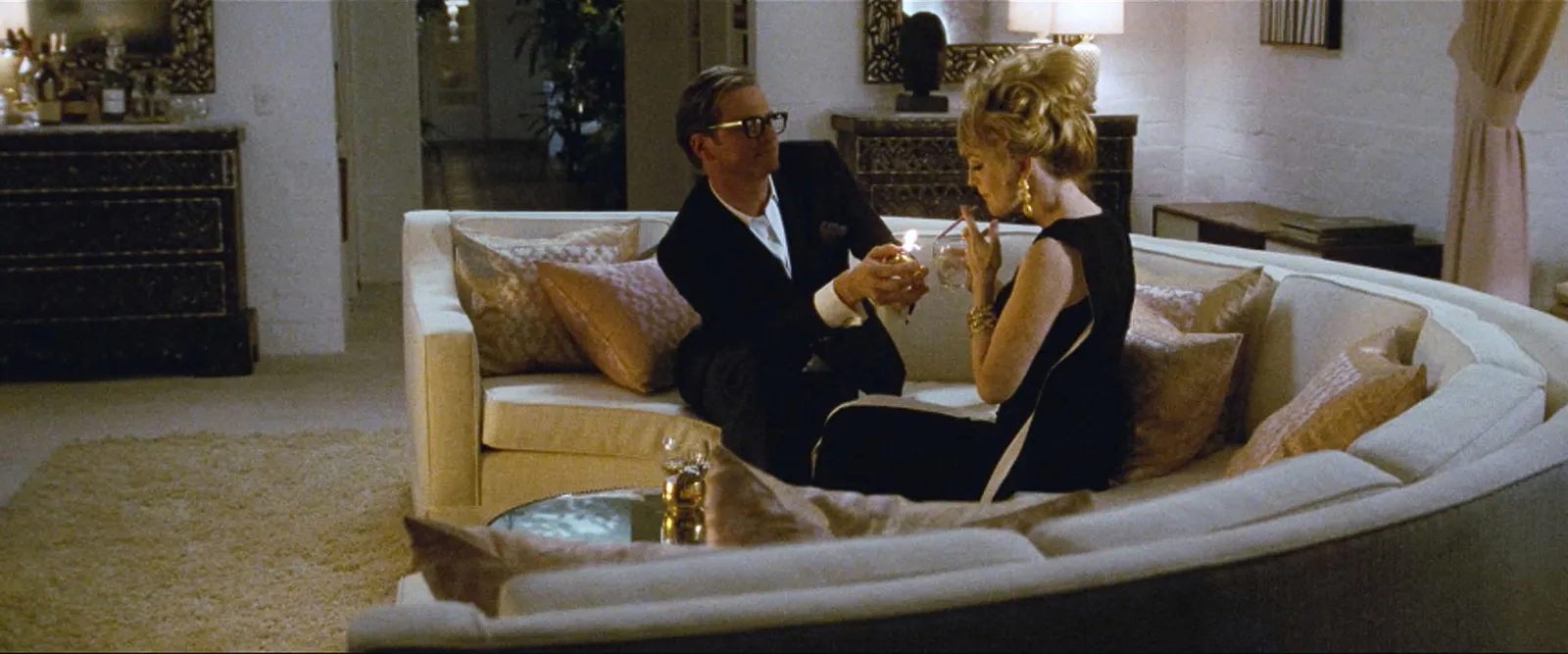
In a luxury Italian living room, furniture is not chosen to fill the space — it is chosen to define the space. This is a fundamental distinction. A sofa, a pair of chairs, a low table: these are not objects that furnish a room. They are objects that, through their proportions, their material weight, and their spatial relationships, give the room its character.
Italian furniture manufacturers — from the historic houses of Milanese design to the smaller ateliers of the Veneto and Tuscany — produce pieces whose quality resides not simply in their surface finish but in their structural integrity. A well-made Italian sofa holds its form across decades. Its proportions were drawn by someone who understood human scale. Its cushions were filled and covered by hands that had done this work for years. This is not production — it is authorship.
The role of the singular object
Every luxury Italian living room has at least one object that operates differently from everything else in the room: a piece that is unmistakably individual, that has a history or a maker’s mark, that cannot be sourced from a catalogue. This might be an antique piece selected for its material quality rather than its period, a contemporary work by an Italian designer of limited production, or a piece of art chosen not for investment but for genuine visual intensity.
This singular object is not the room’s centrepiece in the conventional sense — it does not compete for attention. It deepens the room. It gives the eye something to return to. And it signals, to anyone who enters, that the room was not assembled but considered.
What luxury actually means in this context
In Italian design culture, luxury is not primarily a price category. It is a quality of intention. A room is luxurious not because of what it cost but because of how much thought went into it — because every element was chosen with knowledge, every relationship between elements was considered, and nothing was allowed to remain that did not earn its place.
“The most luxurious thing in a room is the sense that nothing in it is accidental.”
This is a demanding standard. It requires time, expertise, and a willingness to work through many iterations before arriving at what is right. But the result — a living room that continues to reveal itself, that functions beautifully across years of use, that feels more itself as it ages — is worth every moment of that rigor.
Frequently Asked Questions
What makes a living room look luxurious in the Italian style?
An Italian luxury living room achieves its quality through material coherence, a clear hierarchy of surfaces beginning with the floor, intentional layering of light, and furniture chosen to define rather than fill the space. The singular quality that distinguishes it is unity of intention: the sense that every decision in the room was made in full awareness of every other decision.
Is natural stone necessary for a luxury Italian interior?
Natural stone — particularly marble — is the canonical choice for Italian luxury interiors, and for good reason: it improves with age, holds light with a complexity no engineered material replicates, and brings geological history into a space. However, the deeper principle is permanence and quality of material, not stone specifically. An Italian designer will identify the right material for your specific space and conditions.
How many furniture pieces should a luxury living room contain?
There is no prescribed number, but the Italian principle is consistently one of restraint: fewer pieces, better chosen. A living room with five or six pieces of genuine quality, in considered spatial relationship to one another and to the room’s architecture, will always outperform a room with fifteen pieces of uneven quality assembled without internal conversation.
Design your living room with Italian rigour.
Online consultations available Tuesday through Friday. All sessions conducted personally by Odilia Prisco from Milan.
Schedule a Consultation